
In product development, timing and realism matter
In product development, the challenge is rarely just manufacturing a part. The real challenge is producing the right part, with the right surface quality, material behaviour and lead time, at the right stage of the project.
Development teams need to validate designs, test assemblies, present realistic samples to customers and bridge the gap between prototype and serial production without committing too early to expensive hard tooling. This is exactly where vacuum casting creates value.
Vacuum casting is a manufacturing method used to produce high-quality plastic parts in silicone moulds under vacuum conditions. In practice, liquid polyurethane resin is cast into a mould cavity created from a master pattern, while the vacuum environment helps minimize air entrapment and reproduce fine details accurately.
The result is a component that can closely resemble an injection-moulded part in appearance, feel and surface quality, but with lower tooling investment than injection moulding and a faster route to realistic prototype or pilot-series parts.
For appearance-critical parts, pilot-series housings, transparent covers and functional prototype components, vacuum casting offers a practical combination of speed, finish quality and manufacturing flexibility.
What is vacuum casting?
The vacuum casting process typically starts with a master model produced through CNC machining or high-resolution 3D printing. A silicone mould is then created around that master pattern. Once the mould is complete and separated, liquid polyurethane resin is mixed, degassed and poured or injected into the mould cavity under vacuum conditions. After curing, the finished component is removed and post-processed if necessary.
Because silicone moulds can reproduce very fine details, vacuum casting can deliver good dimensional accuracy, excellent surface detail and production-like visual quality. The process is especially valuable when companies need realistic plastic parts quickly and in relatively small quantities.
One of the greatest strengths of vacuum casting is its ability to combine design freedom with visual quality. Components can be manufactured with smooth surfaces, transparent sections, colour matching, coatings, inserts and printed markings. Modern polyurethane materials can be selected to simulate the appearance, feel and selected performance characteristics of many plastics used in injection moulding, including ABS-like, PP-like, PC-like and rubber-like materials.
This makes vacuum casting much more than a prototyping technique. When material requirements, tolerances and operating conditions are suitable, it can also be a practical manufacturing solution for refined pre-series production and low-volume commercial batches.
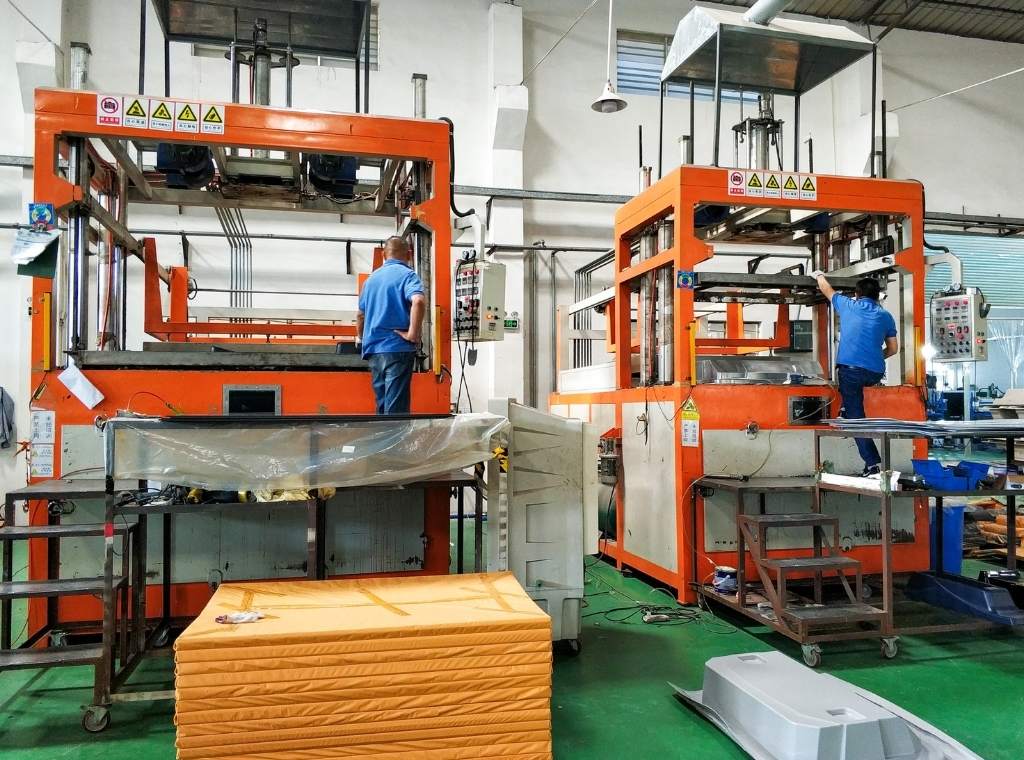
Design, materials and production considerations
Successful vacuum-cast parts begin with a well-designed master model and careful attention to manufacturability. Since the silicone mould reproduces the master pattern very accurately, details such as visible surfaces, wall transitions, air entrapment risks, demoulding directions and mould split lines directly influence the final quality.
Parts with cosmetic requirements, thin walls, transparent sections or integrated inserts particularly benefit from early design review. While vacuum casting is highly flexible, good engineering practices still improve consistency, finish quality and production efficiency.
Material selection also plays a critical role. Today’s vacuum casting materials include rigid, transparent, high-temperature, flexible and impact-resistant polyurethane grades. This broad material range allows product teams to evaluate stiffness, transparency, texture and user experience long before serial production begins.
For products that require painted finishes, colour consistency or presentation-quality surfaces, vacuum casting offers a clear advantage over many early-stage prototype methods. The finished parts can be visually close to final production components, which makes them suitable for customer presentations, exhibitions, internal approvals, packaging validation and market testing.
Vacuum casting also occupies an important middle ground between 3D printing and injection moulding.
3D printing is usually the fastest route for early concept models and rapid design iterations. Injection moulding becomes the optimal solution once production volumes justify hard tooling investments. Vacuum casting fits between these stages by providing production-like aesthetics and simulated material behaviour without the high upfront costs associated with serial mould tooling.
For many companies, this is where vacuum casting delivers its greatest commercial value: it helps validate the product, collect feedback and reduce risk before committing to injection moulding tools or serial production.
Why vacuum casting works before injection moulding
One of the most important advantages of vacuum casting is risk reduction.
Before investing in serial injection moulds, companies can evaluate assembly fit, ergonomics, appearance, packaging compatibility and stakeholder feedback using parts that are visually and functionally close to final production components. This reduces uncertainty during development and helps teams make more confident decisions before entering serial production.
Vacuum casting is particularly effective when product development evolves during the process. Surface expectations may change, geometries may require tuning or transparent parts may need improved visual quality. In these situations, vacuum casting provides a practical and cost-effective way to learn from realistic components without prematurely committing to expensive tooling.
Once the design is validated and production volumes increase, the project can transition more smoothly into rapid tooling or full injection moulding.
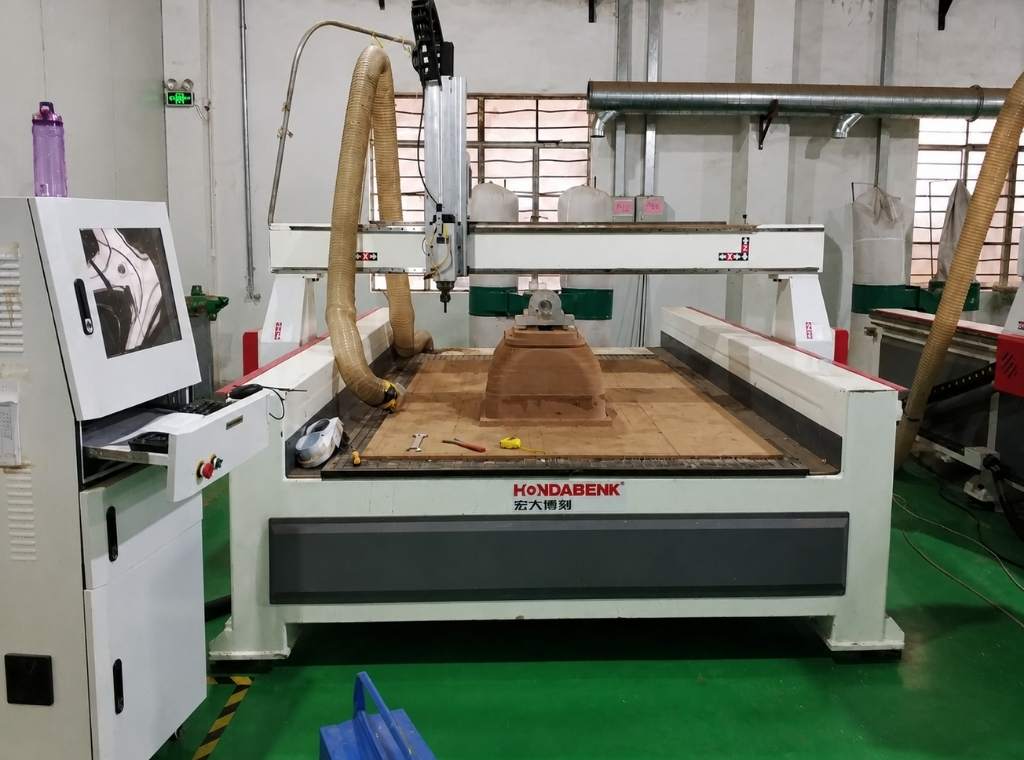
This staged manufacturing approach helps companies accelerate product launches while controlling development costs and technical risk.
Vacuum casting with Gelecta Finland
For customers working with Gelecta Finland, vacuum casting can be a natural part of the product-development and pre-series manufacturing phase.
Through its manufacturing network, Gelecta Finland supports projects where high-quality prototype and low-volume plastic parts need to be connected with CNC machining, rapid tooling, injection moulding, assembly services, logistics and sourcing support. This allows customers to move more efficiently from concept development toward serial production.
With local project management in Finland and manufacturing coordination in Shenzhen, China, Gelecta Finland supports European customers through a practical combination of technical communication, supplier management and international manufacturing capability.
The company emphasizes audited supplier networks, long-term sourcing expertise and cooperation with manufacturing partners operating under ISO-certified quality systems. For customers in Finland, the Nordic region and across Europe, this creates a practical balance between technical support, manufacturing flexibility and competitive production capability.
Gelecta Finland’s expertise is especially relevant for industries such as medical technology, electronics, industrial equipment and other demanding high-tech applications where surface quality, dimensional accuracy and reliable supply chains are critical.
Rather than functioning as a standalone prototype process, vacuum casting becomes part of a broader industrialization workflow that supports the transition from early development to production-ready manufacturing.
Quality, applications and next steps
Vacuum casting is particularly well suited for housings, covers, enclosures, grips, transparent components and other visually demanding plastic parts. It is also highly effective when companies require realistic pilot-series components for demonstrations, internal approvals, trade fairs, sales samples or early commercial deliveries.
Because modern polyurethane materials can simulate the appearance, feel and selected performance characteristics of many production plastics, vacuum casting supports applications across medical devices, electronics, industrial systems and consumer products.
Like every manufacturing process, vacuum casting has a clear ideal use case. If production volumes become very high, injection moulding is usually the most cost-efficient long-term solution. If only a few rough concept models are required immediately, 3D printing may be faster.
However, when the goal is to produce refined, production-like plastic parts in low quantities, vacuum casting offers a strong balance of speed, cost-efficiency, material realism and surface quality in modern product development.
For companies looking to reduce development risk and move confidently toward serial production, vacuum casting can be an effective manufacturing solution. Together with Gelecta Finland, it can be evaluated as part of a broader product-development and industrialization pathway from concept phase to pre-series manufacturing and onward to serial production.